Swift journey, serene soul
Tokyo felt like such a dream. For me, the perfect blend of everything and a place I truly felt comfortable in. I openly wondered if this was just Tokyo or all of Japan.
After a few weeks blissfully chasing coffee through Tokyo neighborhoods, it was time to find out.
Per usual, I had nothing much planned. I knew I had about a month before my next scheduled stay, at the farthest edge of the country. So it was time to ramp up my travel and switch into vacation mode. Lots of places in a short amount of time, all without feeling rushed.
My loose plan had been to head to Osaka via the Shinkansen bullet train. The night before, while reviewing the itinerary, I decided I wanted to break it up a little. So the next morning, I switched and went halfway to Nagoya.
What a great decision! I found Nagoya to be a very enjoyable city. Not as big as Tokyo or Osaka, but large enough to have plenty of things to do for a few relaxed days. A mix of historic sites and beautiful parks kept my days full. Japanese nights are for photography, it seems, as I spent my evenings wandering the streets capturing their vibrant colors.
Things ramped up quite a bit more upon arriving in Osaka. It’s a massive place and requires effort and dedication to see much of it. My passion for coffee really helps in places like Osaka. The best cafes are never concentrated in one place and are often in hidden neighborhoods. Each day, my quest for the perfect cup had me wandering tiny streets in lesser-known neighborhoods full of charm.
Much like Bologna in Italy, Osaka is said to be the culinary heart of the country. So I tried to do what any rational person would do … eat everything! From narrow, covered alleys to main street ramen shops, I ate and ate, and when I was full, I went to 7-Eleven to eat some more.
I took time out of my busy coffee-food duopoly to indulge in another passion of mine, football. On a steamy summer evening, I took the metro out to the stadium to enjoy Gambo Osaka v Yokohama FC. It was amazing to see how passionate the Japanese fans are about the sport. The atmosphere was electric as the supporters never stopped singing, chanting and waving flags. My 100% record of not witnessing a loss for the home club continued as Gamba came from behind to win 3-2 in a thrilling encounter.
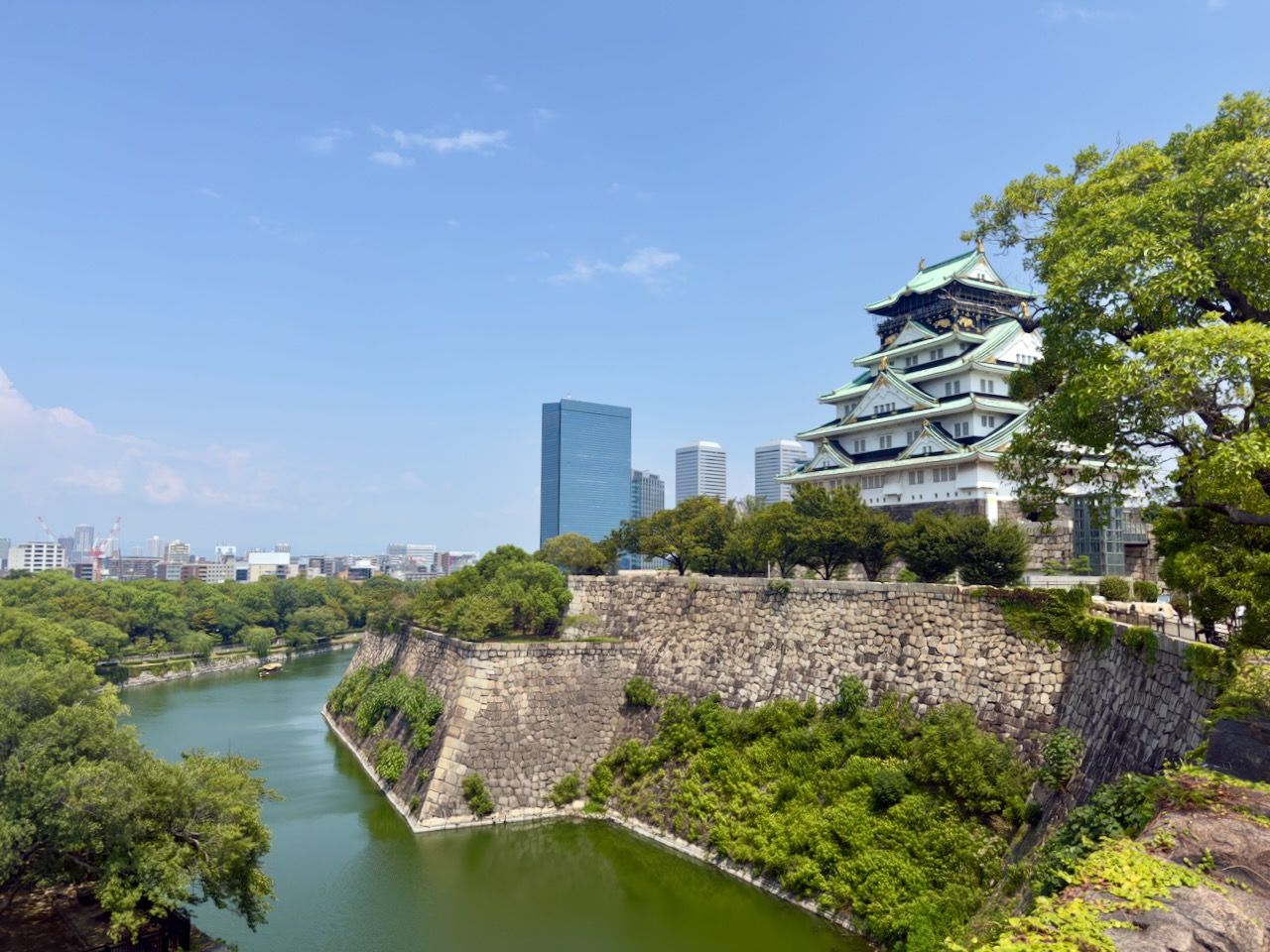
Osaka is a study in contrast, with its modern city intensity set against the traditional, calming quiet. I could have a coffee in the hip vintage shopping area of Nishishinsaibashi, then sidle a few blocks to relax in Utsubo Park. Or take in the majesty of Osaka Castle in the afternoon and indulge in late-night street food on the infamous streets of Dotonbori.
And the food …. what can be said that hasn’t been said before. Absolutely delicious. Takoyaki, those famous little balls of grilled octopus, are the perfect snack or starter. Kushikatsu, skewers of wagyu beef, deep-fried meats and veggies. Okonomiyaki, that famous savory pancake at the center of one of cuisine's most intense rivalries. I’ll say it here, and now, Hiroshima style is best.
Speaking of Hiroshima, it was my next landing spot, and one of my favorite places in Japan. I wouldn’t say I had reluctance to arrive here, but maybe a little trepidation. I know it's famous for such a terrible reason, and as an American, I was unsure how the people here view the bombing or Americans. The Japanese are quick to point out that it was the US that helped it rebuild.
Hiroshima has a subdued and tranquil feel. It’s not the biggest of cities, but it can feel that way, while still maintaining a very local charm. For a city that was completely flattened by an atomic bomb, it retains a historic feel to it.
The highlight of my limited time was a spontaneous hike I stumbled into. In an effort to cover as much ground as possible, I had taken the street car to its southern terminus, with the idea to walk back. However, upon reacing the terminus I realized Motojina Park was on the peninsula and I decided to walk it first. It felt like a hidden world, so quiet and serene, away from the rest of the city. At the southern edge of the park, I sat and enjoyed the views of the harbor and surrounding islands.
I can’t leave this city without extolling the virtues of Hiroshima style Okonomiyaki. Here they take a layered approach, stacking each ingredient rather than mixing it all together Osaka (Kansai) style. On a teppan, a large hot plate, a thin crepe of batter is placed first. This is followed by a mound of shredded cabbage, bean sprouts, pork belly, a layer of yakisoba or udon noodles, and topped with a fried egg. Crucially, don’t forget to slather with sauce and mayo. This dish may have replaced Khao Soi as my “last meal” meal.
Let's also take a moment to talk about the transportation in this country. It is simply incredible. Every single city I visited had a mass transit system of some type alongside buses. Nagoya, Osaka and Fukuoka all had excellent metro networks, while both Hiroshima and Nagasaki boasted charming streetcar networks. It makes the meager offering in similarly sized cities in the US, like Minneapolis, embarrassingly pathetic.
And while Japan is well known for its incredibly efficient train system, for my next leg, I opted to take the slower, cheaper bus option. So happy I did, as it was a beautiful drive through the mountains, and then along the coast as we crossed onto Kyushu, arriving in Fukuoka.
Fukuoka might be my favorite city in Japan. It is the perfect blend of size, tradition and modernity. It’s become a haven for young people in the country looking for a place to live and work that isn’t Tokyo. That youthful vibrancy can be felt all over the city.
As with many other areas of Japan, Fukuoka has an amazing plethora of regional foods. Most famous among them is Tonkotsu ramen. Its broth is made from slow-boiled pork bones, and features thinner noodles than its more northern cousins. This is my favorite style of ramen. The broth is thick, rich and savory. Where Okonomiyaki could be my last meal, this ramen could easily be my everyday meal.
The city is also famous for its Yatai – miniature, fully-equipped wooden restaurants on wheels. They are small, temporary, open-air food stalls that appear on the streets every evening. But not like a street stall, they are fully formed restaurants that bring their own kitchen, seats and counters. They arrive around 6 pm and vanish around 10 pm.
I had the pleasure to meet up with my new friend Haruka, who is from Fukuoka, and get a full tour of the Yatai scene. We strolled the streets picking and choosing yatai as we went. A few skewers here, some ramen there, then a little yakisoba. Always with laughs and good conversation.
Across from my hostel was the incredible Ohori Park. I spent quite a bit of time relaxing around its lake, people watching. I’m not sure how, but I missed the fact that there was a contemporary art museum in the park the first several times. Thankfully I did find it as it was an incredible museum, filled with art from around the world, including some of my favorite artists.
On my last day in town, I met up with Haruka again for coffee. I feel so grateful to have met him as he’s such an incredible human. His outlook and perception of the world are insightful, curious, grounded in reason and full of aspiration. We shared much about ourselves and our journeys in life. Our conversations will be some of my most treasured from this adventure. It was comforting to know I would see him again when I reached my next long stay, which was rapidly approaching.
Before that, however, I had one last stop on this whistle-stop month of travel. Another enjoyable bus ride found me in the port city of Nagasaki.
The city proved to be as charming as every other city I’ve visited in Japan. As with Hiroshima, it was impressive to see how the city rebuilt itself after being completely devastated. Once the only port in Japan open to foreigners, Nagasaki has an international flavor. Areas with street signs in Portuguese and pubs named after English traders mix seamlessly with a vibrant Chinatown and traditional Japanese city vibes.
From the relaxed waterfront of Dejima Wharf to stunning views from Inasayama Observation Park, I found the city captivating. A visit to the excellent Atomic Bomb Museum kept it all in perspective. The museum is dense in information about that fateful day in August 1945, a harrowing reminder that we all need to be kinder to each other. But it strikes an upbeat tone, extolling us to seek a better future.
My whirlwind jaunt across the western half of Japan was coming to a close. From Nagasaki, I would depart across the open seas to a place even most Japanese don’t know exists.
I was happy to find that the rest of Japan suits me just as well as Tokyo. With each day in-country, I felt it climbing the ranks, finding its way into one of my top five favorite countries in the world. For all the reasons I love Vietnam, Japan has been almost the opposite of all of them ... and I love that.
Its social formality gave me structure. It’s a place made for single humans, like myself, and I welcomed it at every turn. Its efficiency paired seamlessly with my need to be on time. Its food is divine, in every region and every city.
I’m not done with Japan just yet, but I’m falling harder and harder for it with each passing moment.
My hope is that the next destination takes it to another level. With this next stop, I’m taking a risk, going so far afield from literally everything. But without risk, there can be no reward.