This must be the place
What you seek is also seeking you
Or put another way ... you get back what you put out into the world.
What I try to put out into the world is an authentic unabashed me. I’m trying to be true and honest in all ways. What I’m getting back are some of the most resonant and profound moments of this incredible adventure I have chosen.
And so it was when I took a leap of faith to book myself into a month on the island of Fukue, in the remote archipelago of the Goto Islands.
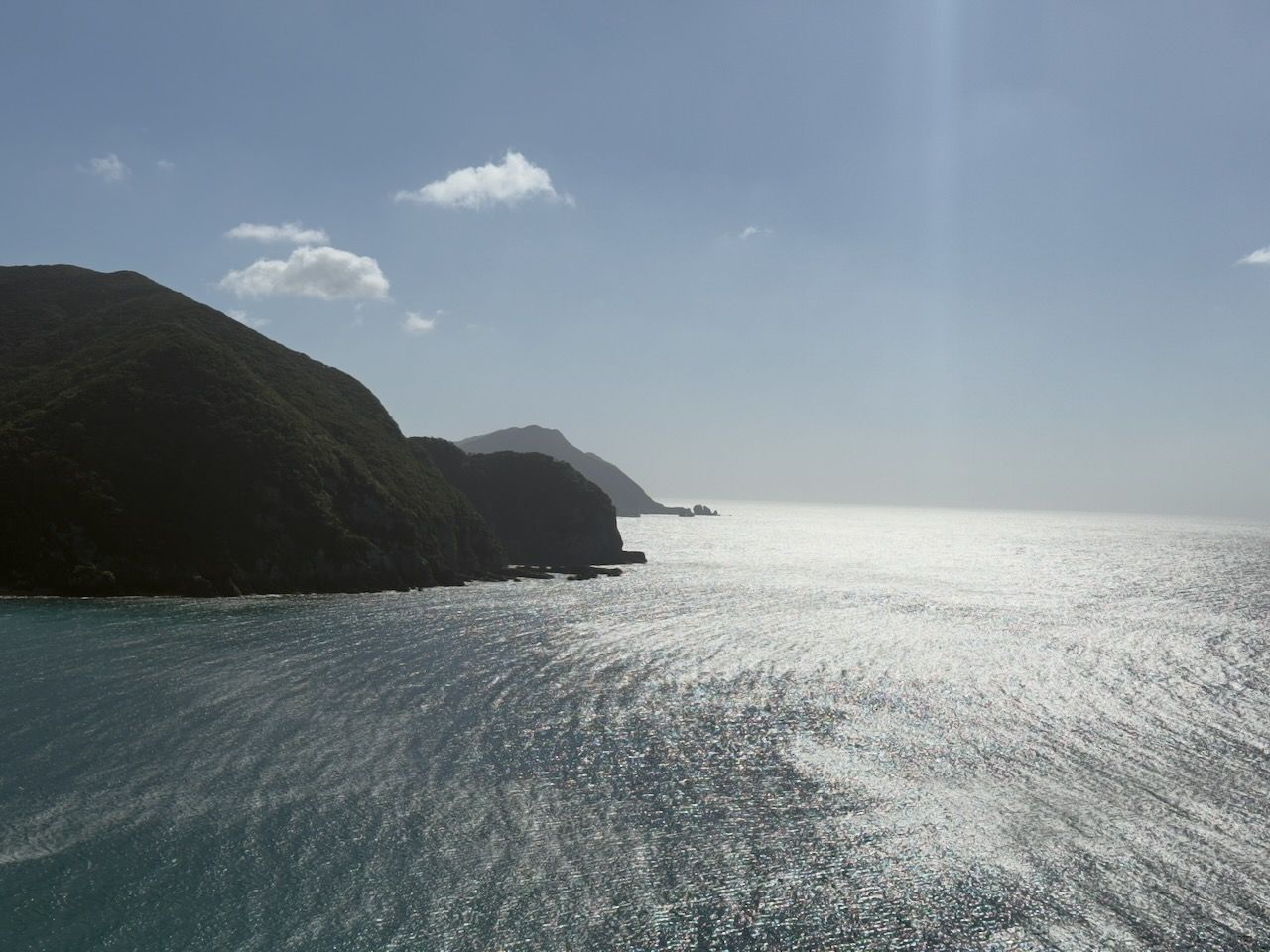
Much like other times of transit, my mind swirled with thought as the ferry pushed away from the port at Nagasaki. With nothing to do for the next few hours, and not a single indoor seat in sight, I spent the voyage on deck, deep in thought. I wondered just what I'd gotten myself into this time. What would I find on this tiny island in the East China Sea? What was I seeking? Would I enjoy it or had I made a terrible mistake?
As my ferry approached the harbor, I felt immediately welcome and at home. The previous anxiety melted away, replaced with tranquility.
I can tell you straight away, Fukue is one of "my places". I connect and resonate deeply with it. While I love the hustle, bustle and chaos of the big cities, my small town roots run deep. The slow, simple life. As I’ve said about other places, it’s not an easy life here, but it’s simple.
The Pier, the coliving at which I am staying, is a calm and serene environment. The relaxed space and easy-going roommates gave my mind and heart space to breathe. I am wide open to my surroundings. Ready and willing to connect with everything and everyone.
On my first night, a couple of local fishermen came by the house with freshly caught squid. They prepared the squid seven different ways. A delicious welcome to life in Goto.
Island life seems the same everywhere. Days move with an ease and unbothered sense of chill. Coffee and books in the morning, afternoon strolls, evenings spent with laughter. I revived my love for running, making it out multiple times each week.
With each passing day, I felt my connection with this place deepen. My love for the island grew and expanded, taking root.
The main town, still locally know as Fukue, isn't big, yet has an incredible amount of things to discover. Over the course of the month, I discovered several museums, shrines, temples and parks. Each day brought new corners to explore, new quiet streets to wander.
But the island is more than just the city, and I was interested to explore more of it.
And so the adventures began.
A few days after arrival, one of the fishermen from my welcome night, Husan, invited us on his boat for sunset. First we skipped across to another island. Once home to a small fishing village, it is now abandoned. As the sunset began melting into the horizon, we wandered the abandoned village. At the water’s edge, we watched schools of brightly colored fish swim in the fading light. As the sky became a gradient of yellow, orange, purple and pink, we took the boat out into the water to witness the closing of another day.
One overcast Saturday, after the daily rain had passed, my housemate, Adrien, and I rented bikes and rode to the northernmost point on the island. Carried on two wheels, we cruised over mountain passes, through dense forest and past vast rice fields. Along the way, we made stops at a small waterfall and an empty beach, where we decided to go for a swim. Warm, late summer water was our reward.
After the swim, we continued to the Jihongai Monument. The word "Jihongai" means "to leave the farthest land of Japan.” This is an important place on the island, as this was the last port of call for the Tang Dynasty envoys. They were a series of official embassies sent by Japan to the Chinese Tang dynasty between 630 and 894 CE. These missions shaped early Japanese civilization by importing Chinese knowledge, culture, and political systems.
With the waves crashing against volcanic rock, I stared out across the East China Sea. I imagined China on the horizon and felt the weight and symbolic nature of this special place. I felt tied to the immense history of the island.
A few days later, my new friend Haruka, whom I met in Fukuoka, arrived to spend a few days on the island. As a member of the team at The Pier, he was here to create and strengthen bonds with local businesses. On his first day, the entire house went to an anniversary party for a hotel/cafe that opened three years ago. Here we met many locals, all fascinated to hear our stories and why we chose to come to Goto.
This became a common theme of my time here. Internationally, the Goto archipelago is virtually unknown. Even here in Japan, few people have visited, and many have never heard of it. So the locals were always curious to know the how and why of my visit. They expressed joy and gratitude that we’ve come to visit and welcomed us to their piece of paradise.
That evening, Haruka and I drove to the westernmost point of Fukue Island for sunset. We have formed a wonderful friendship, and our conversations flow effortlessly. He is an extremely introspective, curious, and emotionally connected person. Our chats tend to flow into the realm of philosophy and deep human connection. No surface-level small talk here.
The next afternoon, I joined Haruka as he made local connections on behalf of the coliving. Our first stop became one of my favorite encounters of this entire adventure. Marie, owner and curator of Te to ba Art Museum, is a special human. The museum is dedicated to showcasing and preserving the unique culture and history of the Goto Islands.
It began with the restoration of an old, long-forgotten barn. With her own hands, she transformed the dilapidated barn into the museum and a studio space. The building includes a loft space that accommodates an artist-in-residence program.
Marie’s passion and love for Goto were evident and powerful. Every word charged with a desire to showcase this hidden archipelago. I was profoundly touched by her words and her deep affection for Goto.
But the meetings and connections didn’t stop there. Next, we stopped at Nice Things Sangosan – a beautiful cafe, gift shop and unique library. I say unique because every book in the space was donated by someone, whether local or visitor. Inside the cover of each book is a small note from the donor briefly explaining what they love about the book. Another beautiful and intimate way this island connects its residents to one another.
The locals of Fukue were incredibly welcoming to us. We were invited on multiple occasions to people’s homes for BBQ, a near-nightly festivity on the island. Each was a gastronomic riot of grilled seafood, meats and vegetables. All washed down with cold beer, highballs and shochu. All accompanied by thoughtful conversation and hearty laughter.
If all this wasn’t enough to make me feel at welcome, we were invited to participate in one of their most important festivals of the year. Fukue Minato Matsuri is deeply rooted in the international legacy of the archipelago. It highlights the island’s significance as the last port of call for the aforementioned Japanese envoys to China.
It is also important for the ties it has to Aomori prefecture, which is in the far north of the country. The centerpiece of the festival is the Nebuta parade, which originates in Aomori. The parade blends this northern tradition with floats celebrating the island’s Wako pirate history. Many of the floats depict these ancient maritime warriors.
Our participation felt surreal and deeply intimate. We donned the traditional happi and were tasked with carrying one of the Nabuta floats. Unlike in the US, the floats aren’t attached to cars or trucks. They are lifted and carried by people, usually around 10-15 for each.
I felt the weight … not just of the massive float, but of the cultural significance the parade represents. The honor was immense and fulfilling.
When you carry the float, you're sort of trapped underneath it. Your world shrinks to shoulders against wood and whatever you can glimpse at eye level beside you. The spectators above can't see you much either, just this massive structure moving through the streets.
As I glanced sideways as we passed the crowd, an older woman caught my eye. Her face showed surprise at seeing a foreigner carrying the Nabuta. But the surprise didn't linger. It transformed into something warmer. She smiled and began to clap. In that fleeting moment of connection, I felt truly welcome. Truly part of it all.
In these last few years, I've been blessed with some magical experiences, but most of them I watched from the outside. Here, I wasn't a spectator. I was an active participant. The opportunity to join in something so meaningful, in such an intimate way, is one of the best experiences of this adventure. Just writing about it now gives me goosebumps.
The experience was made all the more special by sharing it with my flatmates. With each passing day, these people grew closer to me. Each of us unique in our story and journey to the island. Each of us open to sharing and learning.
The Pier was the smallest and most intimate coliving I’ve stayed in yet. I was a bit nervous before arrival to stay in such a small place with so few other colivers. Worried that we wouldn’t get on or that there wouldn’t be enough people to cultivate friendship. But The Pier was so serene it served only to enhance the bond and togetherness we formed. Game nights, excursions around the island, cooked meals, language exchange, inside jokes and plenty of high balls.
As people departed, my last week was only Yukiko-san and I. We shared the smallest amount of language, but perhaps the biggest connection. We were able to have deep conversations, rich cultural exchanges and more laughs than I can count.
This final week contained some of my favorite moments from my time on the island. We attempted night photography, revisited my favorite places and watched the super moon. We drank cocktails, visited coffee shops, went to onsen and saw the most beautiful beach ever.
Generally we had a grand ole time. It was a perfect send-off to my time on Fukue.
Not since my month in Torre a Mare, nearly three years ago now, have I felt so at home in a place. I could move to and live on this island in a heartbeat. Such was the immediate and soul-feeding connection I felt in Fukue.
What started as a random decision to visit a remote island on the edge of Japan, became one of the most enriching experiences of these chosen adventures.
Sometimes life works in mysterious ways. My time here felt a world away from the darkness I felt only months earlier. I found myself reflecting on that shadow and honoring it as what I required at that moment. Without those lows, we can’t have these highs. The slow pace of the island was the safe place I needed to process it, say thank you to it and ultimately say goodbye to it.
Fukue was the right place, in the right time. It fed my heart, challenged my mind and lifted my soul. The ease, the glow, the sparkle had returned. The glow is warm and the sparkle bright. Like a phoenix rising from the ashes, I feel reborn. After sitting with my shadow for months, I am once again shining my light.
Your thoughts are cards held in your hand A little bit of water, a little bit of sand The world is a stage, a place to play And everything's right in its own way Everything's right, so just hold tight
Exiting the island, I felt part of myself staying behind, forever anchored to this place. It’s unlikely, but I desperately hope that I will return someday. Regardless, it is a place and time that will now stay with me forever, filling my heart and soul with tranquility and joy.
This is probably the most photos to a single post I’ve ever used. But my affection for this place runs so deep, I couldn’t help it. I hope you enjoy.